What this tool does and when to use it
This finder shows the birthstones for each month from the modern list used by jewelers in the US, which started in 1912 and was last changed in 2016 when spinel joined August. For every stone you get its color, its hardness on the Mohs scale and a plain answer on whether it will survive an everyday ring. Use it to check your own stone, or to pick stones for a gift or a family ring.
How to find your birthstone
- Pick the birth month. Choose the month. The day does not matter on the modern list.
- Compare the options. Months with more than one stone show each one, so you can pick by color or budget.
- Check the hardness. Stones of 7 or more on the Mohs scale suit rings worn every day.
Birthstone chart by month
| Month | Birthstone | Color | Mohs hardness |
|---|---|---|---|
| January | Garnet | deep red | 6.5 to 7.5 |
| February | Amethyst | purple | 7 |
| March | Aquamarine, Bloodstone | pale sea blue; dark green with red flecks | 7.5 to 8; 6.5 to 7 |
| April | Diamond | colorless | 10 |
| May | Emerald | green | 7.5 to 8 |
| June | Pearl, Moonstone, Alexandrite | creamy white; milky with a blue sheen; green in daylight, red to purple under warm light | 2.5 to 4.5; 6 to 6.5; 8.5 |
| July | Ruby | red | 9 |
| August | Peridot, Spinel, Sardonyx | yellowish green; red, pink, blue and more; banded red and white | 6.5 to 7; 8; 6.5 to 7 |
| September | Sapphire | blue, also pink and yellow | 9 |
| October | Opal, Tourmaline | flashes of many colors; many colors, pink is popular | 5.5 to 6.5; 7 to 7.5 |
| November | Topaz, Citrine | golden or blue; yellow to orange | 8; 7 |
| December | Turquoise, Zircon, Tanzanite | sky blue to green; blue is most popular; violet blue | 5 to 6; 6 to 7.5; 6 to 7 |
The modern list was first agreed in 1912 by the trade group that is now Jewelers of America. Tanzanite was added to December in 2002, and in 2016 Jewelers of America and the American Gem Trade Association added spinel to August, next to peridot. The UK has its own list, first set by the National Association of Goldsmiths in 1937, which differs in a few months, so a British jeweler may suggest a different stone.
Which birthstones suit an everyday ring?
Hardness on the Mohs scale tells you how well a stone resists scratches. Household dust contains quartz, which is 7, so anything softer slowly dulls when worn every day on a hand.
- Very tough (8 and up): diamond, ruby, sapphire, alexandrite, spinel and topaz. Good for engagement and everyday rings.
- Good (7 to 8): garnet, amethyst, aquamarine, emerald, tourmaline and citrine. Fine for rings; emerald often has natural inclusions, so avoid knocks.
- Handle with care (below 7): peridot, moonstone, opal, turquoise, zircon, tanzanite and pearl. Lovely in earrings and pendants; in a ring, choose a bezel setting that wraps the edge.
Months with more than one birthstone
Six months have a choice: March (aquamarine, bloodstone), June (pearl, moonstone, alexandrite), August (peridot, spinel, sardonyx), October (opal, tourmaline), November (topaz, citrine) and December (turquoise, zircon, tanzanite). Extra stones were usually added to give a cheaper or tougher option. Citrine costs far less than fine topaz, and spinel gives August babies a red or pink stone that is harder than peridot.
Birthstone colors at a glance
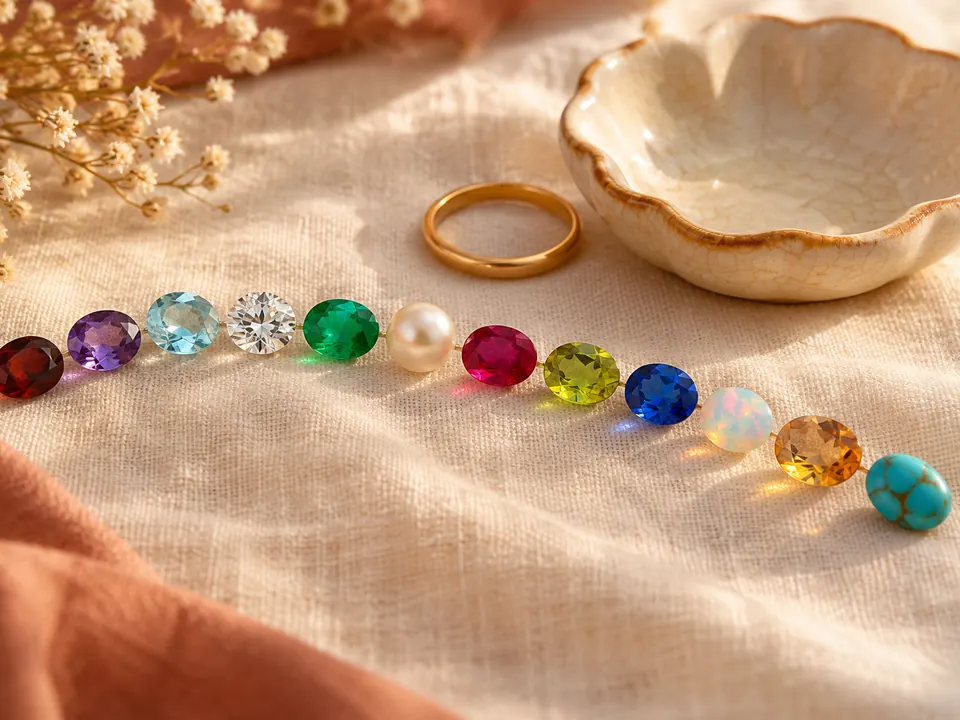
For a family ring or a gift with several birthdays, colors often matter more than names. Reds: January garnet and July ruby. Purples and violets: February amethyst and December tanzanite. Blues: March aquamarine, September sapphire and December zircon or turquoise. Greens: May emerald and August peridot. Clear or white: April diamond and June pearl. Warm yellows: November citrine and topaz. October opal shows many colors at once.
Matching jewelry to your coloring? Find your skin undertone first: cool undertones usually suit silver with sapphire, amethyst and aquamarine, while warm undertones glow in gold with citrine, garnet and peridot. Then see your full palette with the color season quiz.