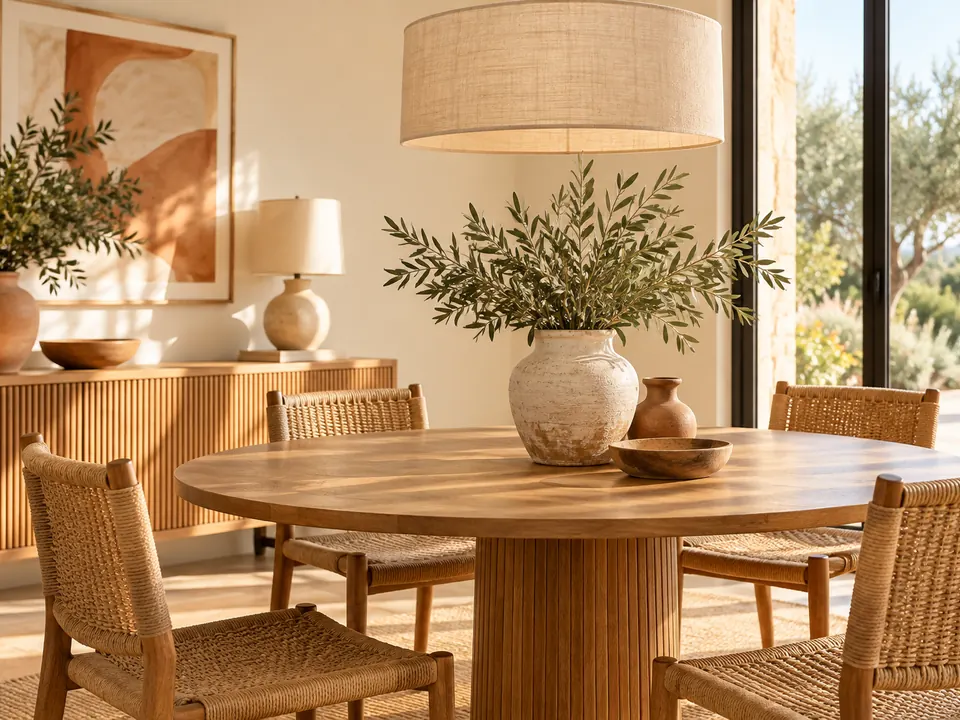
How to choose a dining table size
Two numbers decide whether a dining table works. The first is space per person: each diner needs about 24 inches (60 cm) of table edge, or 30 inches (75 cm) for roomy, comfortable seating. The second is clearance: leave at least 36 inches (90 cm) between the table edge and the walls or furniture, so people can pull out chairs and sit down. Where people need to walk behind seated guests, make that 42 to 48 inches.
So the largest table your room can take is its length and width minus about 6 feet (1.8 m) in each direction. A 12 by 10 foot dining area leaves space for a table up to 72 by 48 inches.
Dining table sizes by number of seats
| Seats | Rectangle | Round | Square |
|---|---|---|---|
| 2 | 36 x 30 in | 30 in | 30 in |
| 4 | 48 x 30 in | 42 in | 40 in |
| 6 | 72 x 36 in | 54 in | 54 in |
| 8 | 96 x 40 in | 66 in | 64 in |
| 10 | 108 x 42 in | 78 in | n/a |
| 12 | 132 x 42 in | 90 in | n/a |
Round or rectangular?
Round tables suit square rooms and smaller groups. Everyone can see and talk to each other, there are no corners to bump into, and they fit neatly under a pendant light. Rectangular tables suit long, narrow rooms and bigger gatherings, and they are easiest to extend. Square tables are cozy for four but get very wide for eight, which makes it hard to reach the middle.
Finish the dining room
Once you know the table size, pick a rug that keeps chair legs on it when people sit back, using the rug size calculator, and balance the wall with the wall art size calculator. For styling ideas, see our dining room decor ideas.