How much soil does a raised bed need?
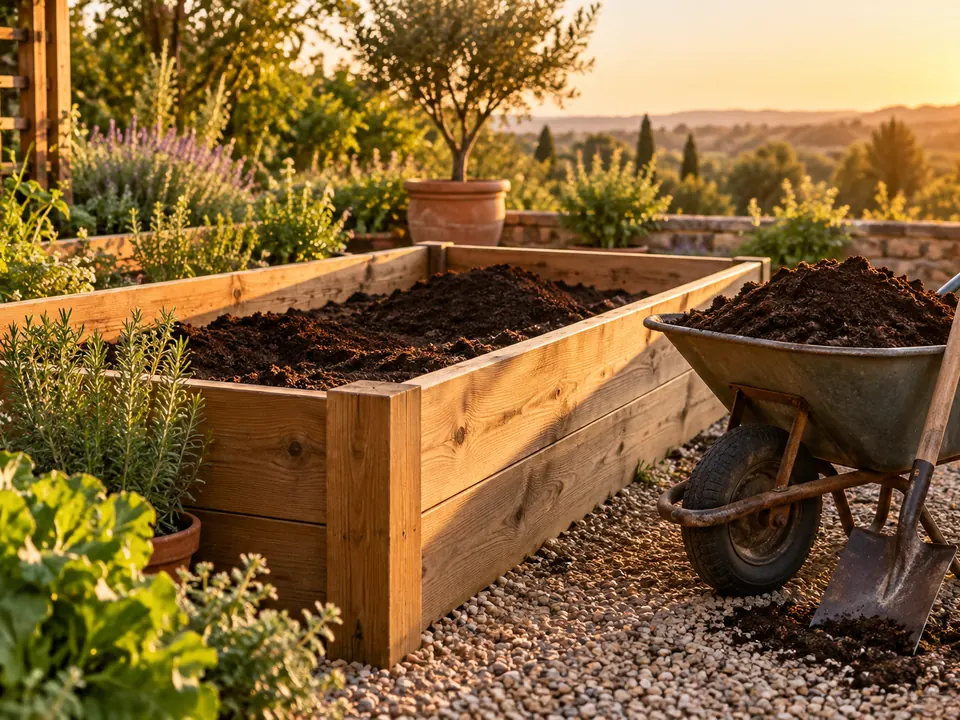
Multiply the length, width and depth of the bed in feet to get cubic feet. A classic 8 by 4 foot bed filled 12 inches deep holds 32 cubic feet, a little over a cubic yard. That is 16 bags of 2 cubic feet, which surprises most people standing in the garden center. The calculator adds 10 percent because loose soil settles over the first few weeks and after watering.
Raised bed soil volume chart
| Bed size | 6 in deep | 12 in deep | 18 in deep |
|---|---|---|---|
| 4 x 4 ft | 8 cu ft | 16 cu ft | 24 cu ft |
| 4 x 8 ft | 16 cu ft | 32 cu ft | 48 cu ft |
| 3 x 6 ft | 9 cu ft | 18 cu ft | 27 cu ft |
| 2 x 8 ft | 8 cu ft | 16 cu ft | 24 cu ft |
The best soil mix for raised beds
Garden soil straight from the ground is too heavy for a raised bed, and pure compost is too rich and settles a lot. A good mix drains freely but holds moisture and feeds plants all season.
- Classic mix: about 60 percent screened topsoil, 30 percent compost and 10 percent perlite, pumice or fine bark for air. Affordable and easy to find in bulk.
- No topsoil mix: equal parts compost, coco coir or peat moss, and coarse vermiculite. Light and fluffy, popular for square foot gardening, but more expensive to fill deep beds.
Topping up each year
Raised beds lose an inch or two of soil each season as organic matter breaks down. Top them up with 1 to 2 inches of compost every spring, and the soil keeps getting better. For layout ideas, see our small garden and backyard ideas, plan the planting with the plant spacing calculator and finish the paths with the mulch calculator.